Inventory
Know which domain points to which VPS
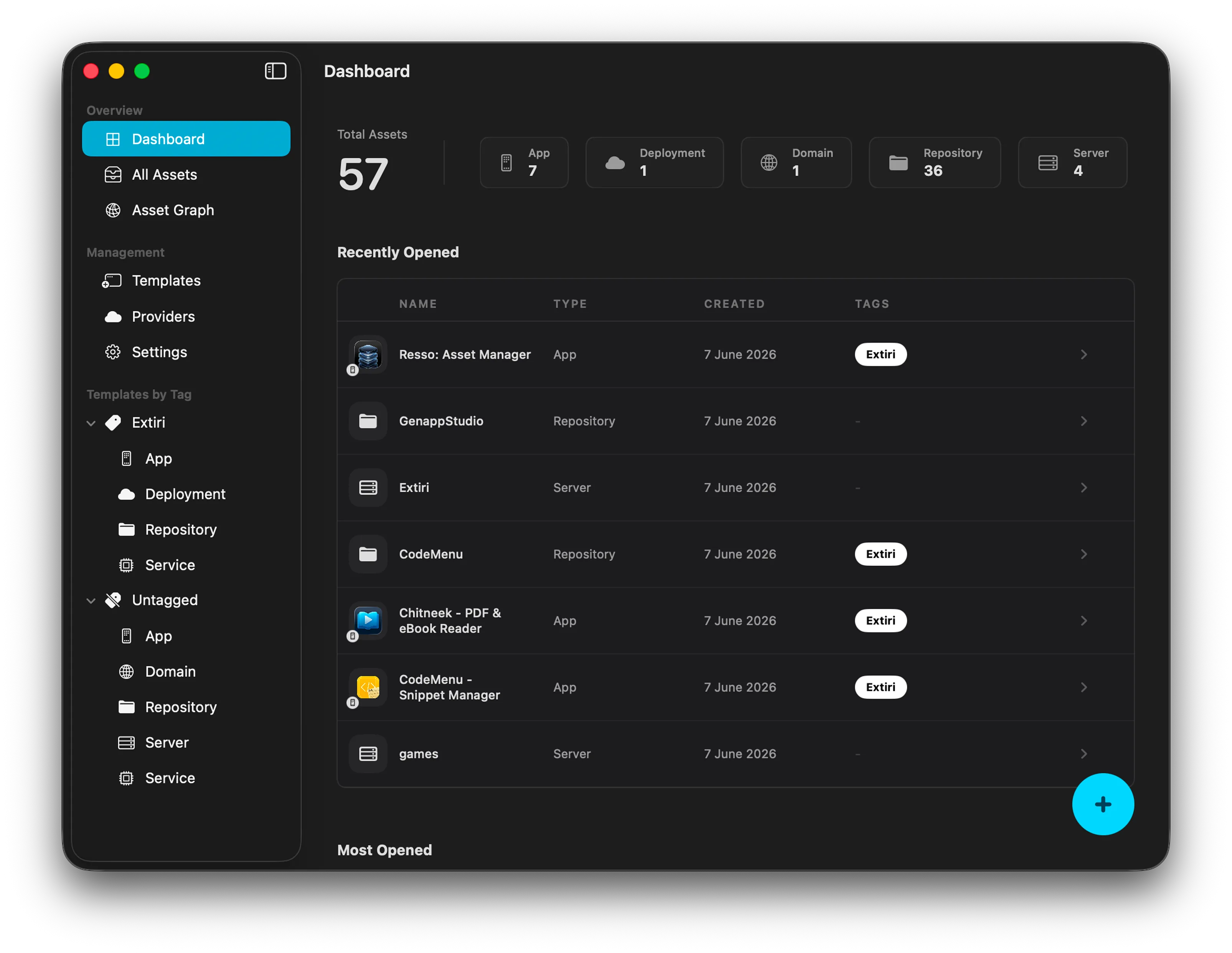
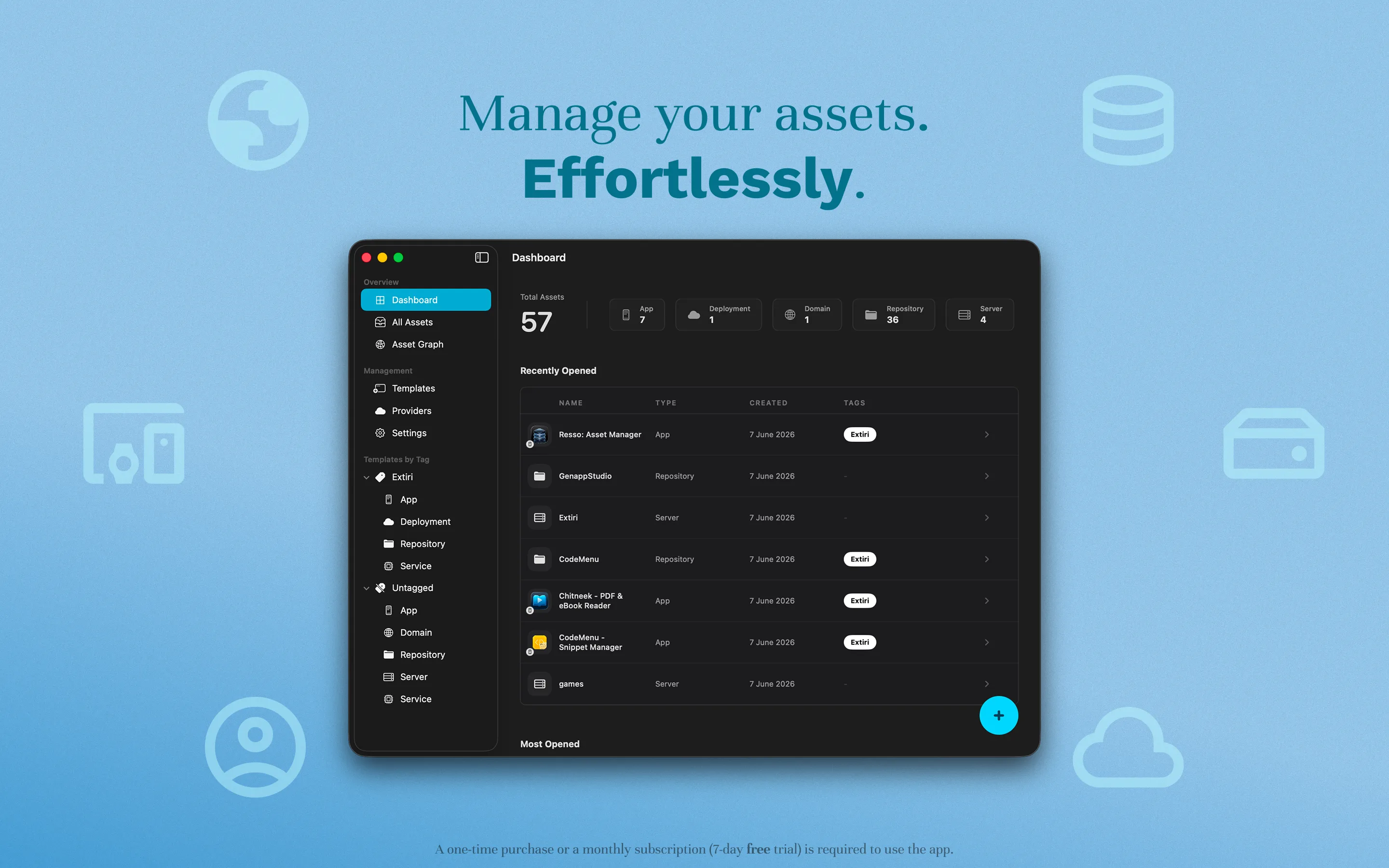
Keep server IPs, domain registrars, SaaS credentials, deployment URLs, and account notes in a single visual inventory instead of scattering them across emails and documents.
Workspace
Resso keeps apps, servers, domains, accounts, certificates, and cloud resources in one searchable workspace. The goal is simple: know what exists, where it lives, and how it connects.
Purposeful utility
Resso is for people who run multiple projects and need infrastructure context quickly: what is deployed, which account owns it, and what might need attention next.
Inventory
Keep server IPs, domain registrars, SaaS credentials, deployment URLs, and account notes in a single visual inventory instead of scattering them across emails and documents.
Connections
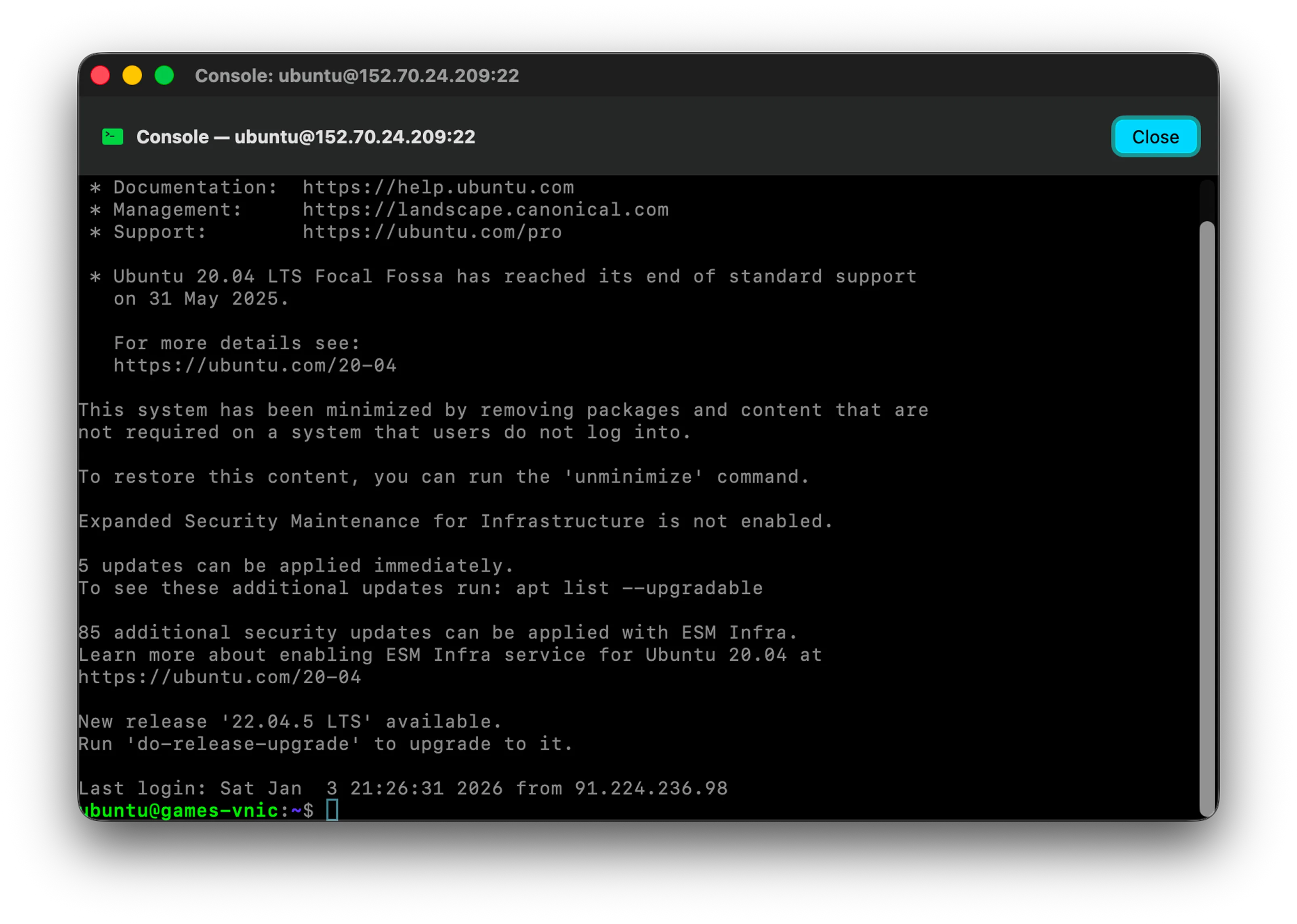
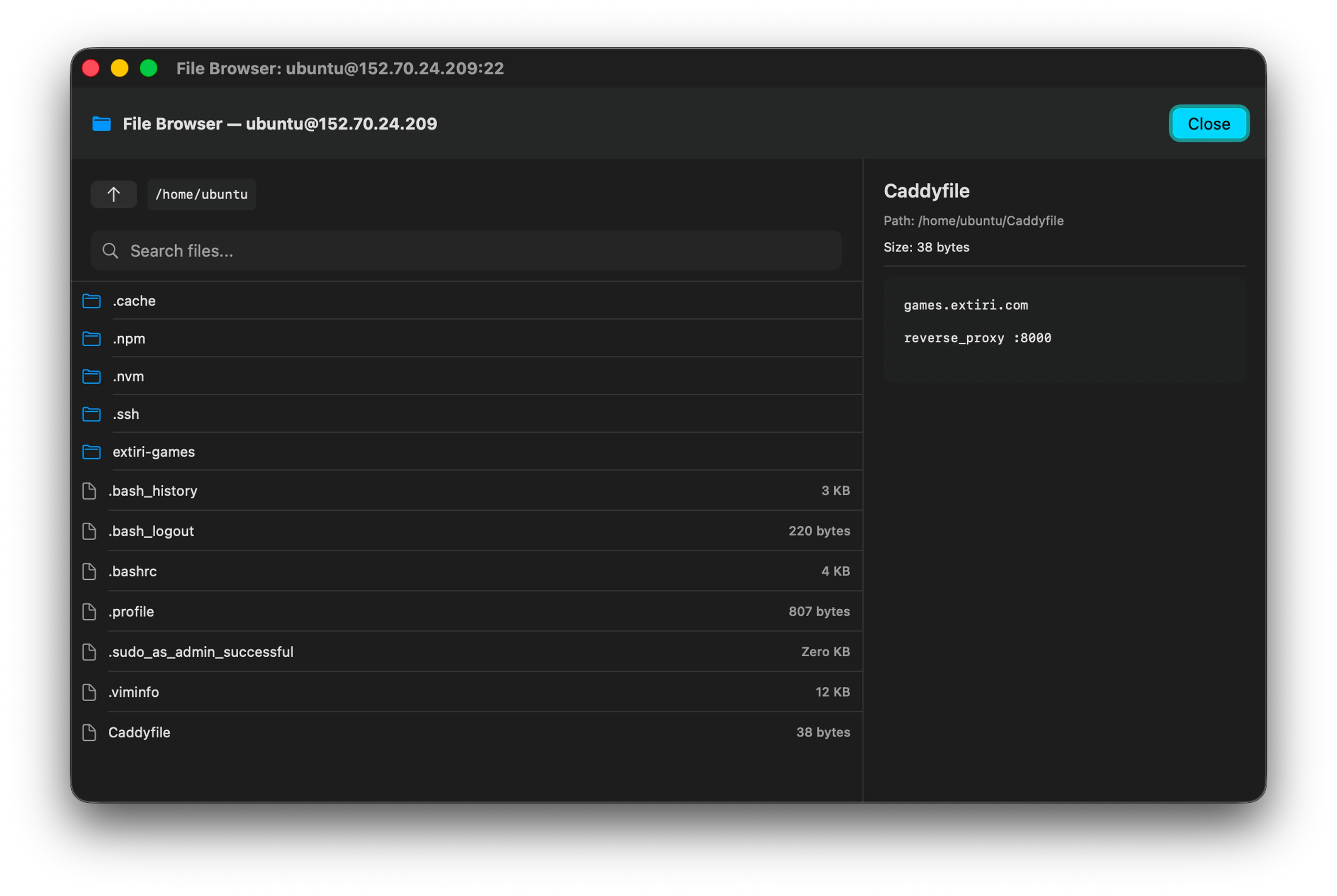
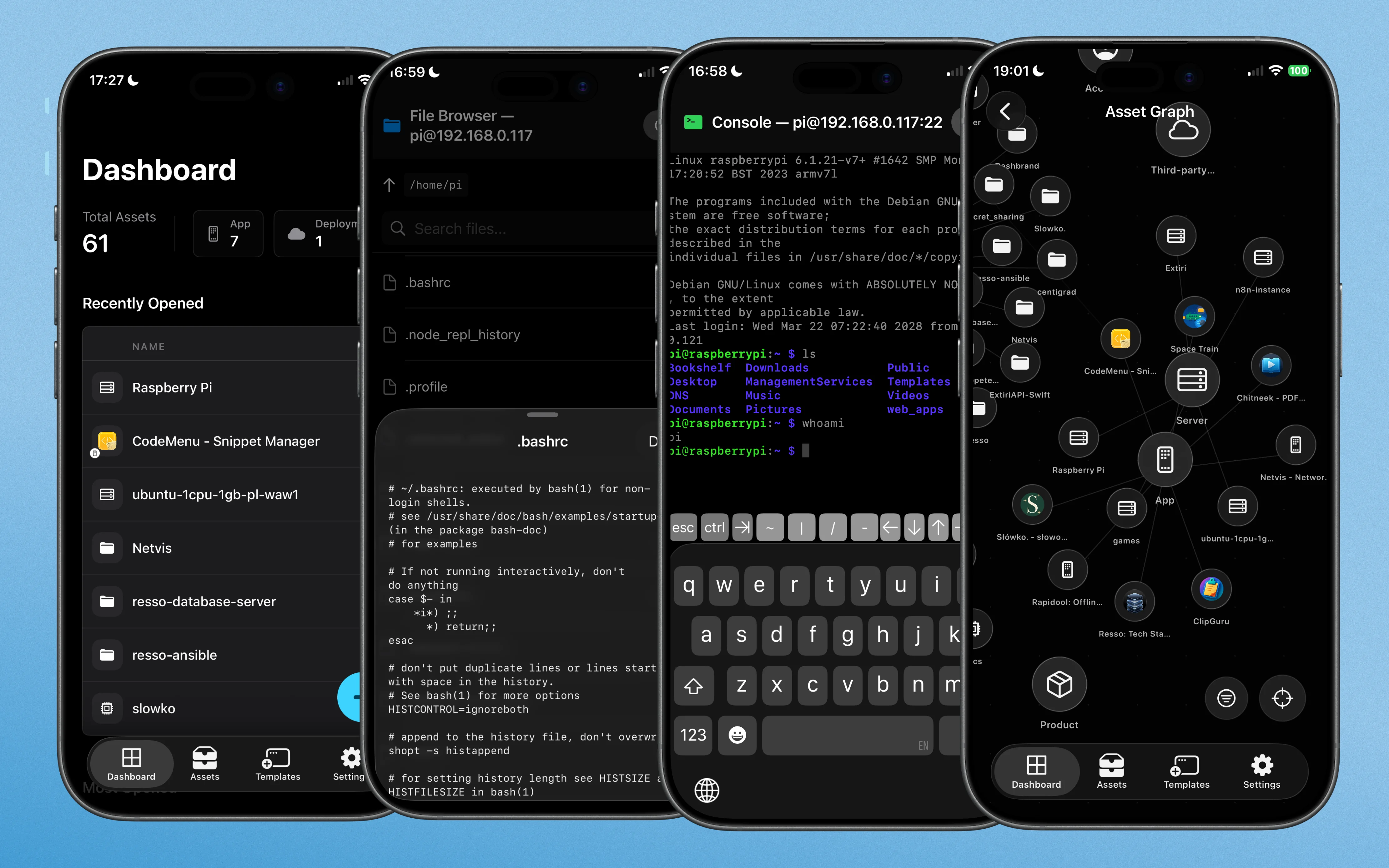
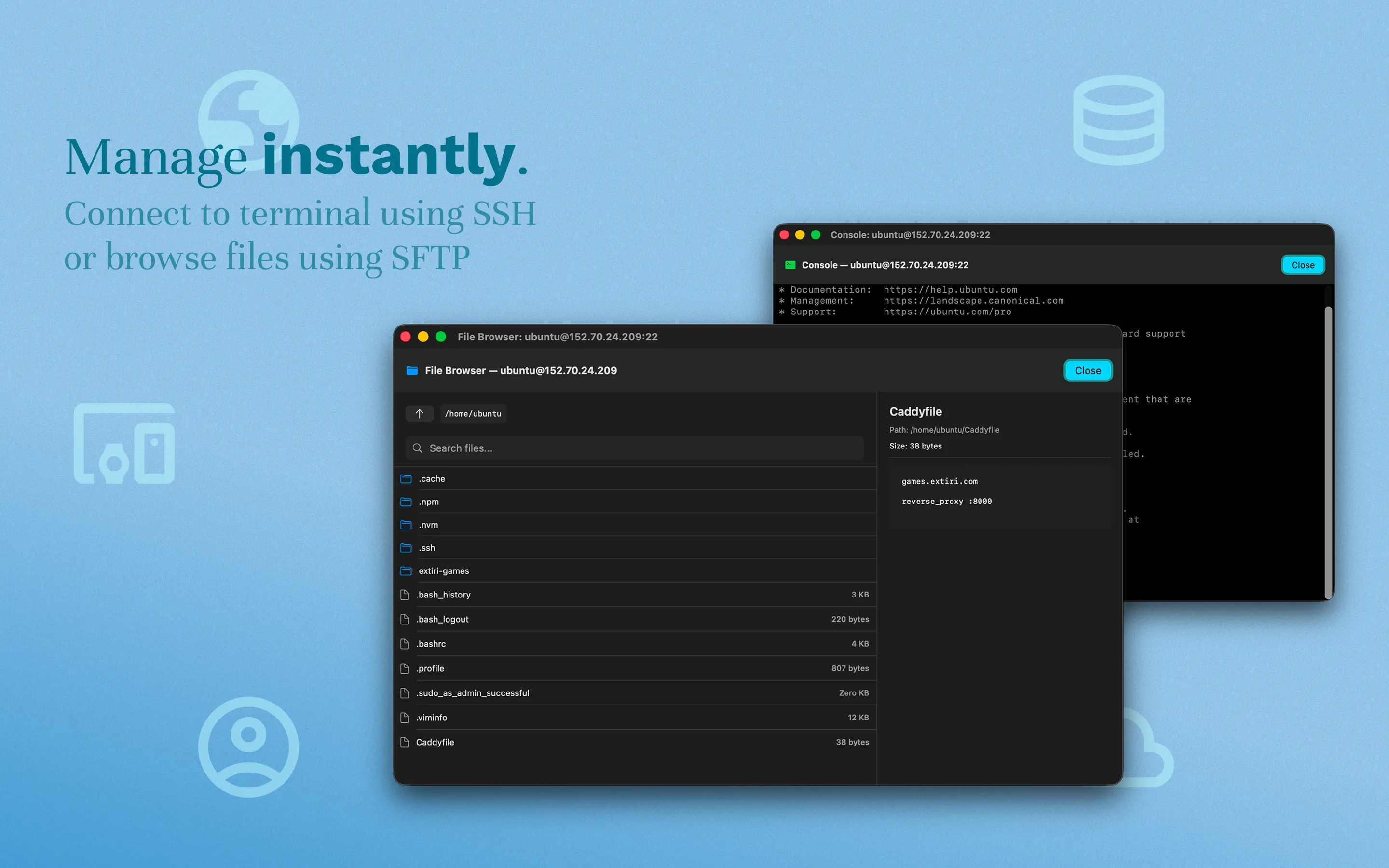
Define a connection property with SSH credentials, then document server details and open
secure terminal sessions or browse files via SFTP from the same asset record.
Graph
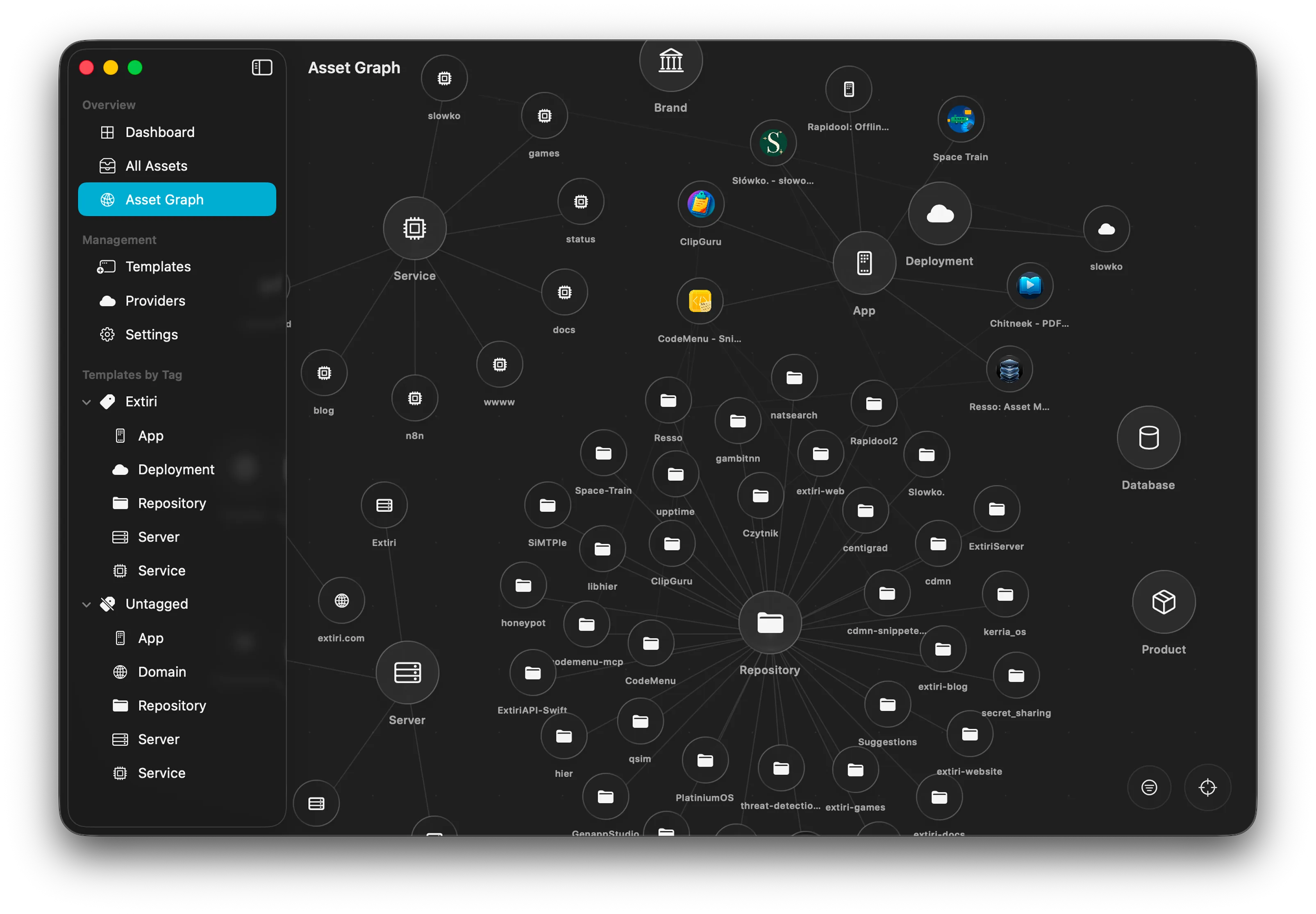
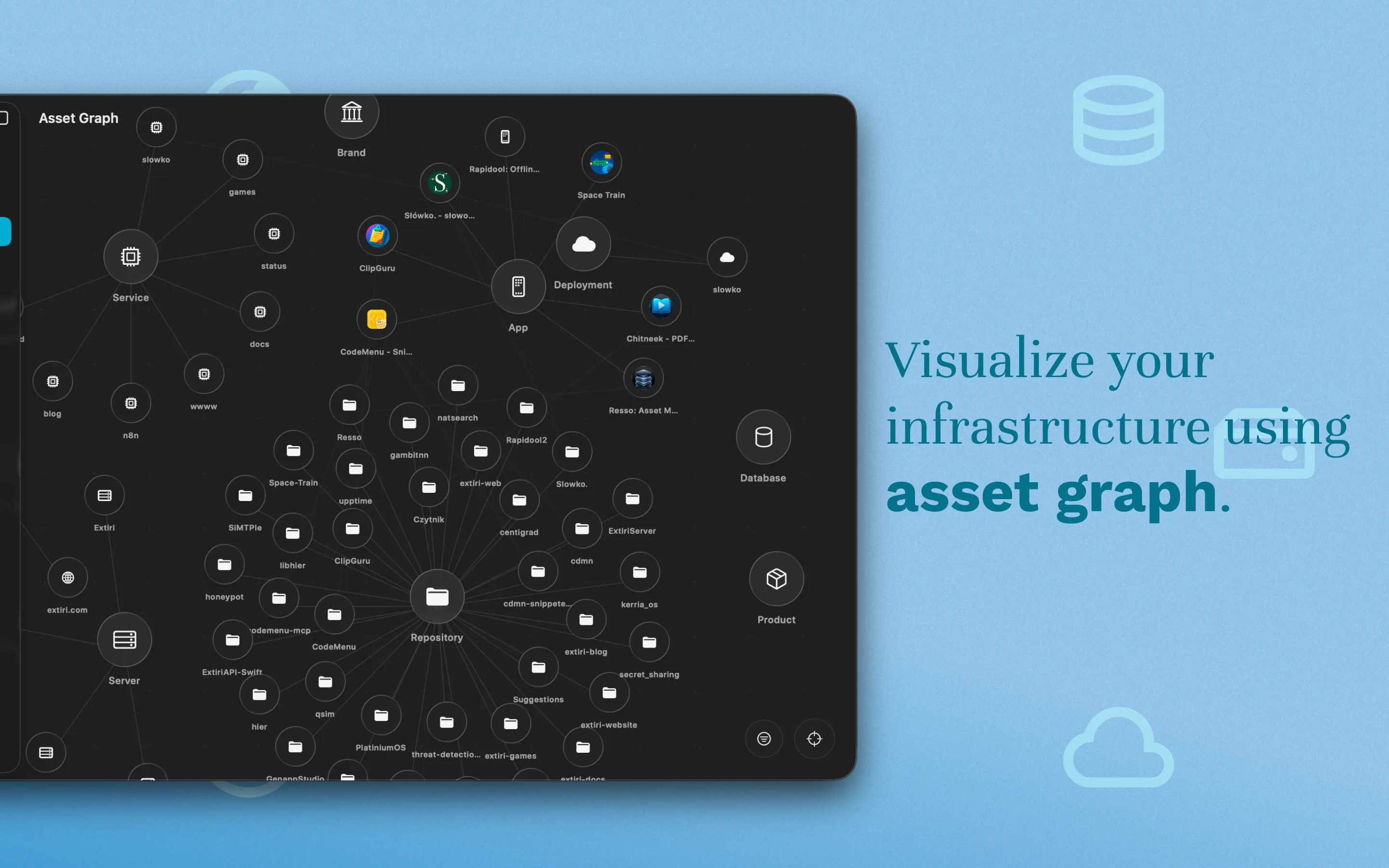
Link staging environments to production databases, map domains to servers, and filter the relationship graph to pinpoint the part of your stack you are trying to understand.
Attention
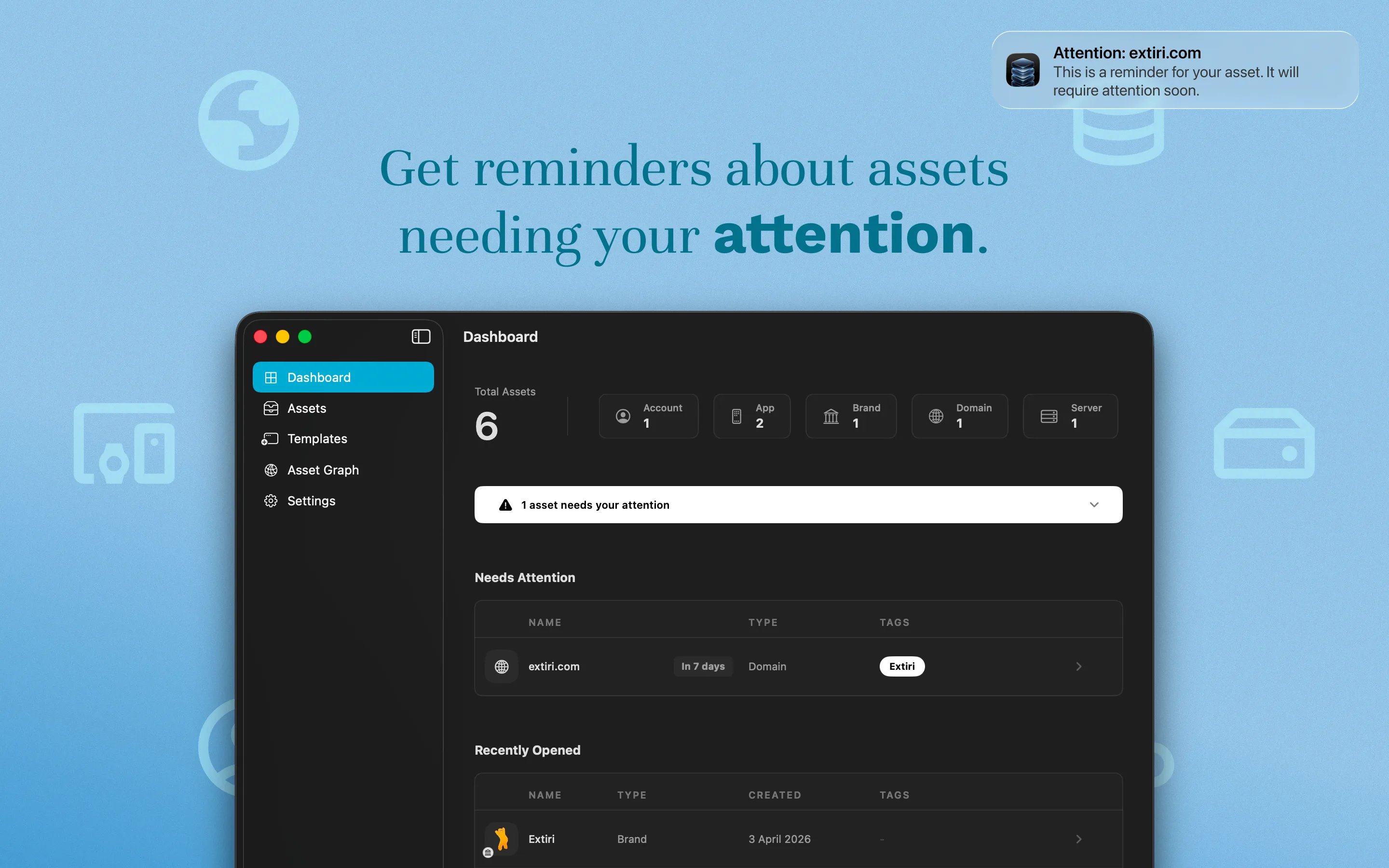
Resso surfaces infrastructure items that need attention, so renewals and expiring certificates are part of your daily dashboard instead of a surprise.
Full ecosystem
Track servers, domains, databases, cloud services, certificates, accounts, and infrastructure notes in one unified asset manager.
IPs, providers, SSH keys, connection details, and operational notes.
Registrars, DNS state, SSL details, expiry dates, and renewal context.
Environments, repositories, CI/CD links, deployment URLs, and owners.
Cloud accounts, SaaS references, 2FA pointers, and subscriptions.
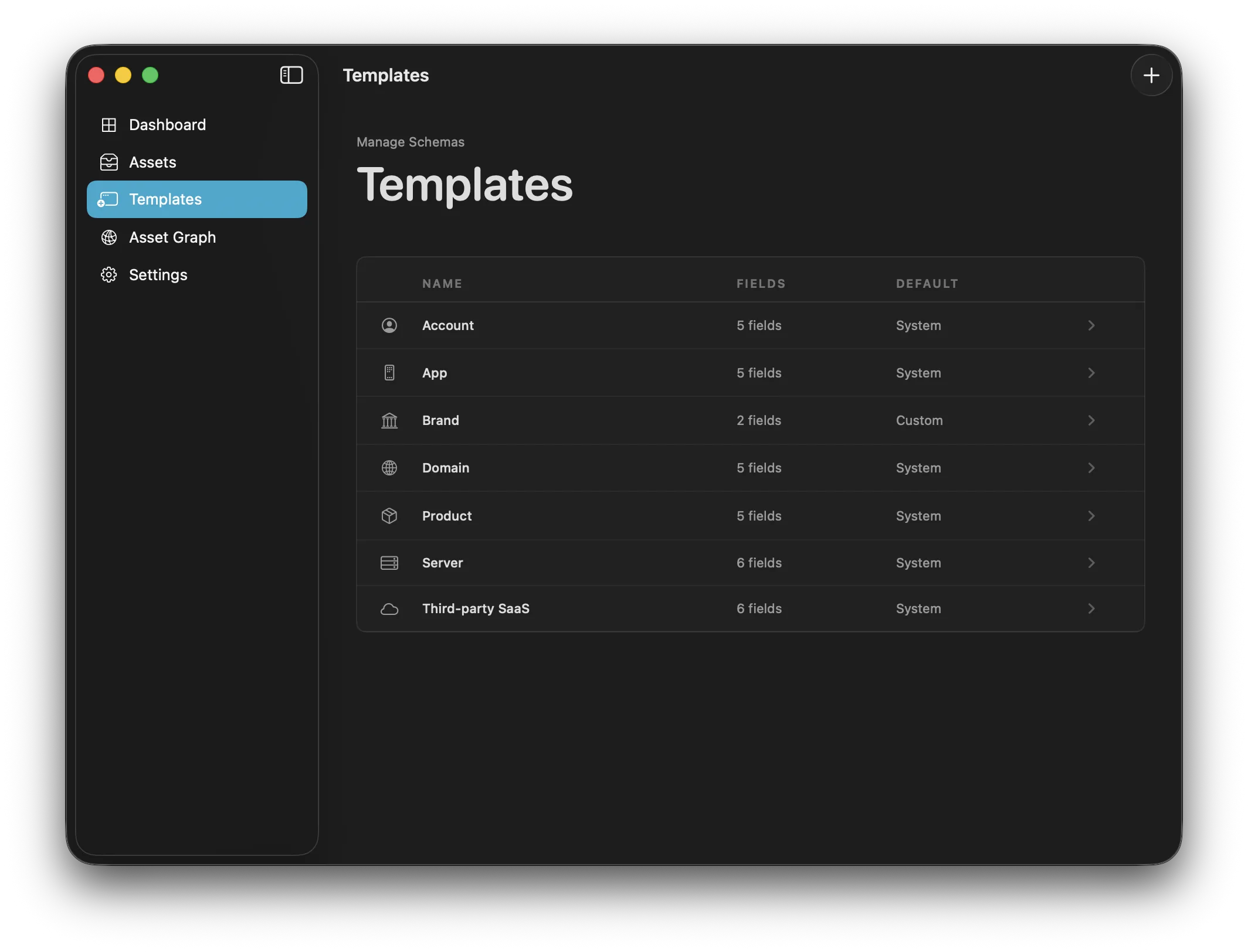
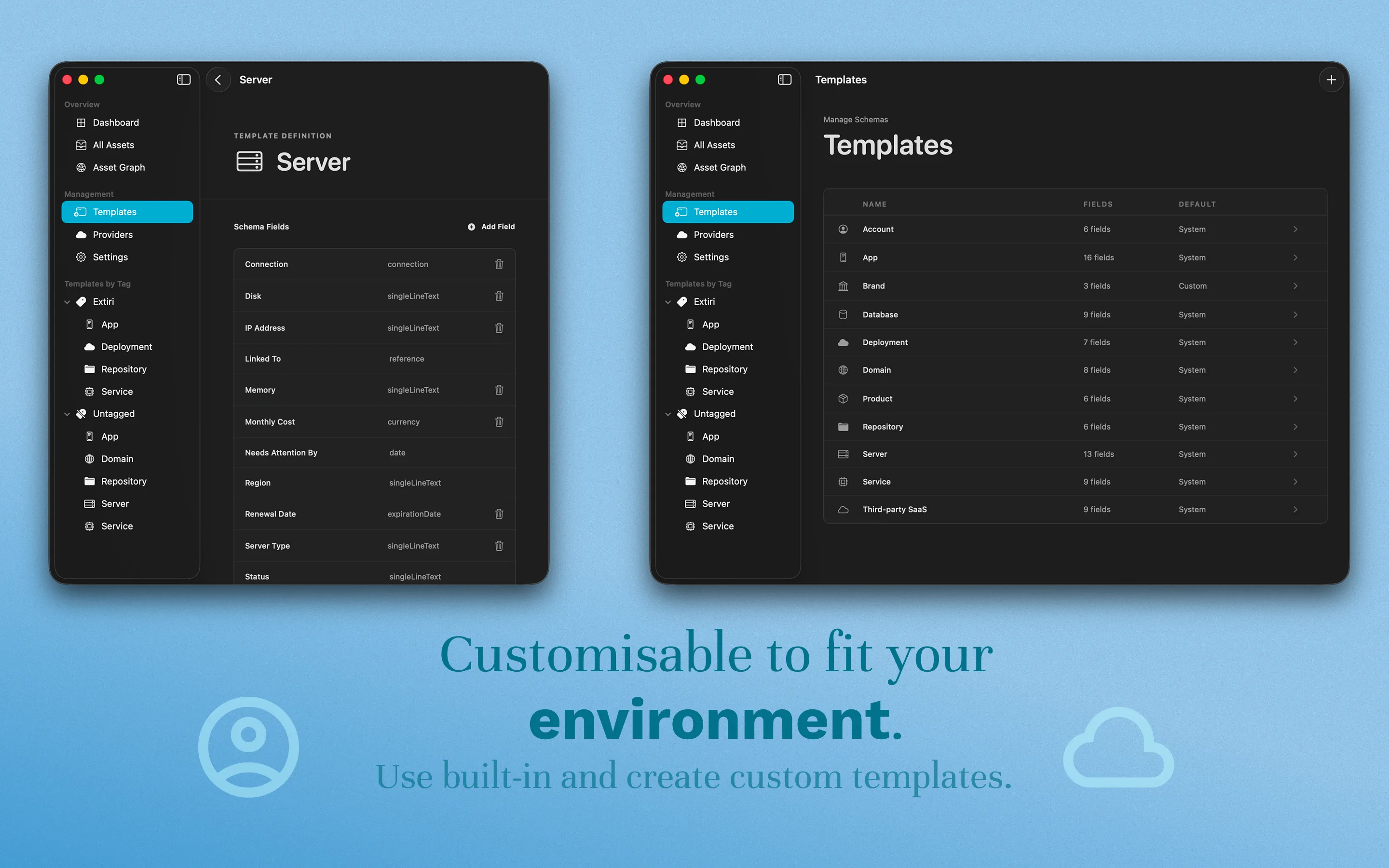
Define templates with files, encrypted files, connections, and raw notes.
Search and standards
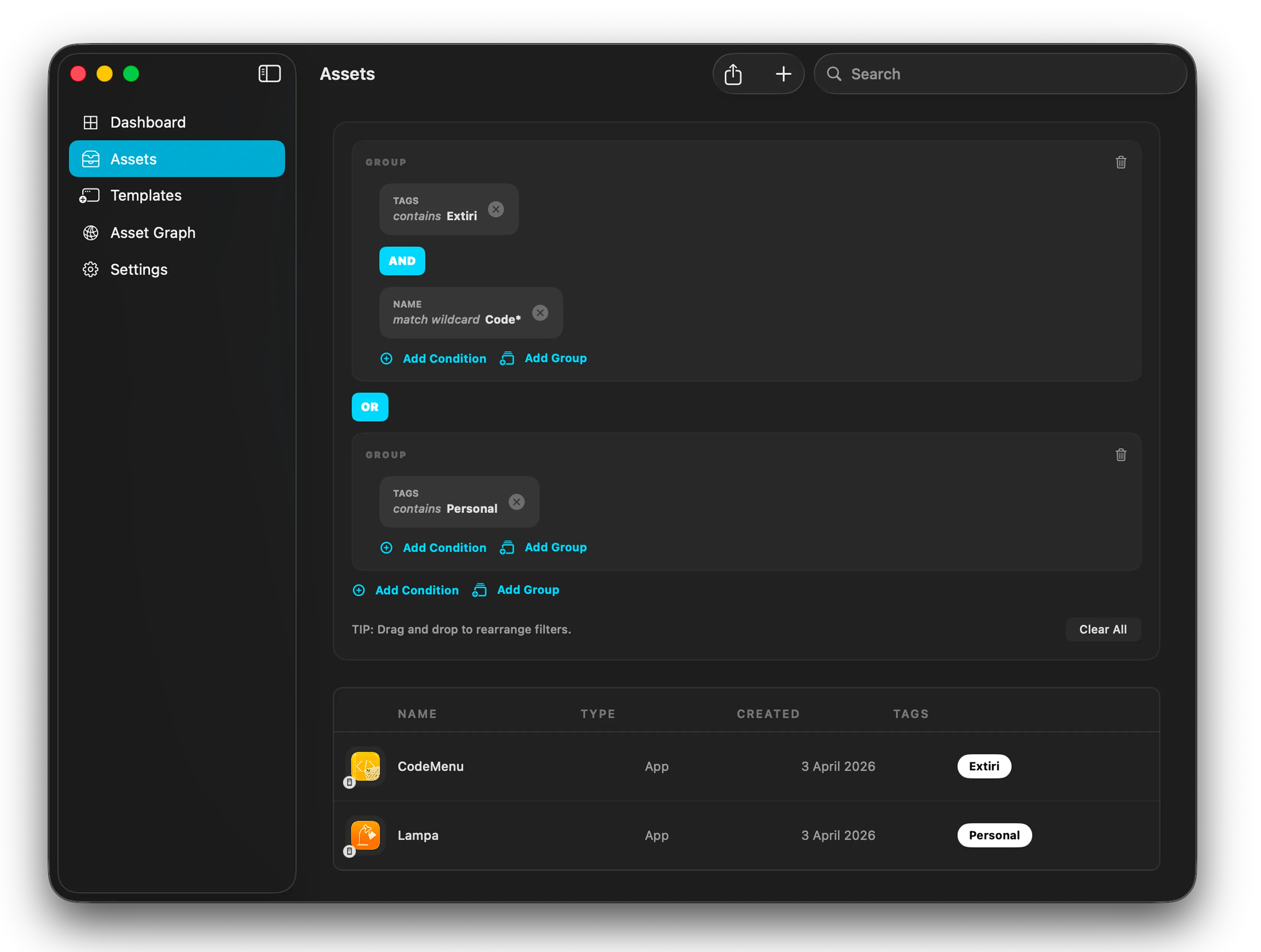
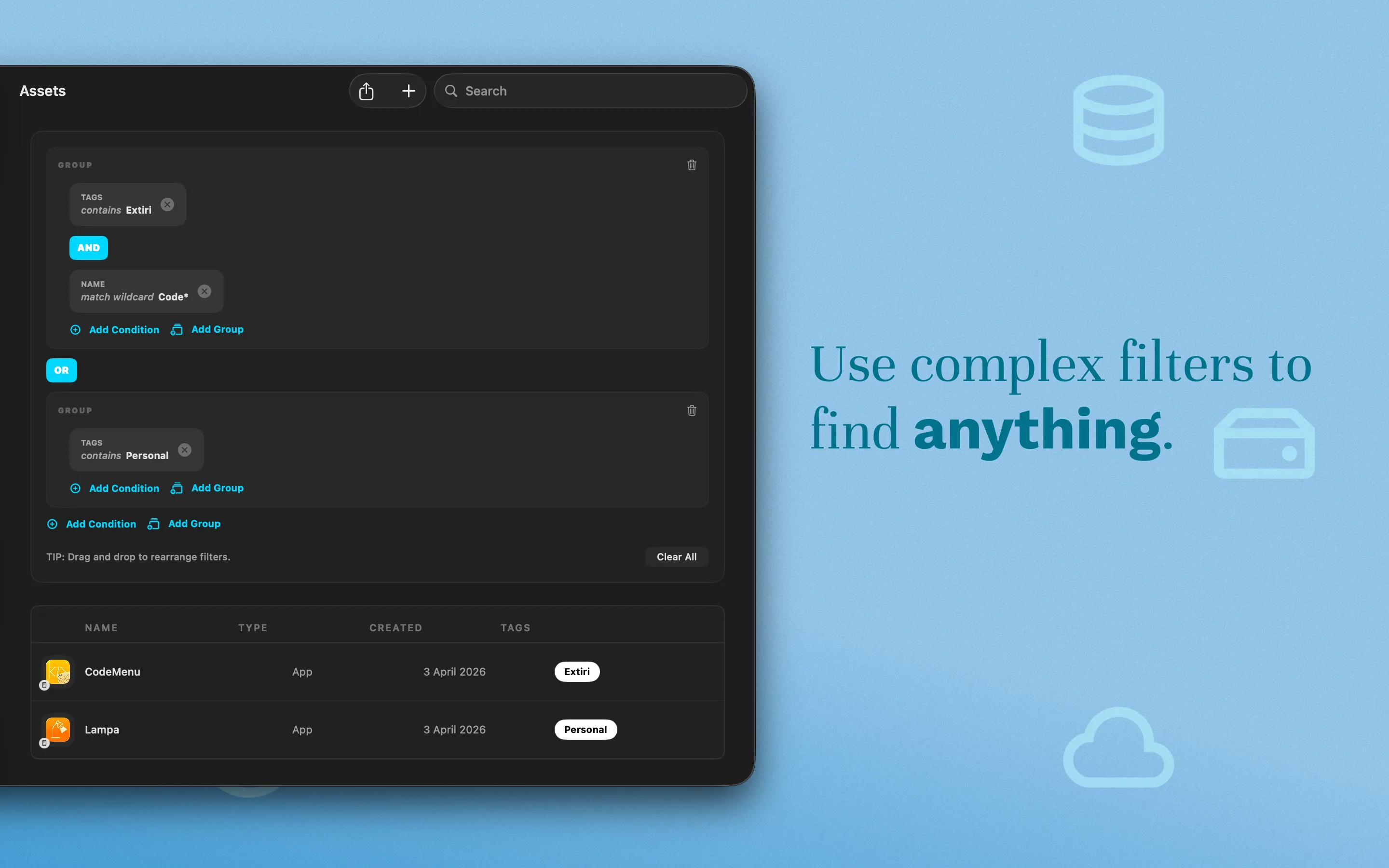
Resso's filter engine supports complex logic tailored to property types. Templates keep repeated asset types consistent, so a server or domain follows the same structure across projects.
Remote database
Use a remote server as Resso's backing storage when infrastructure knowledge should be shared instead of living on one Mac. Another Resso app or any compatible API can provide the database endpoint, including the official self-hosted server.
Sync and automation
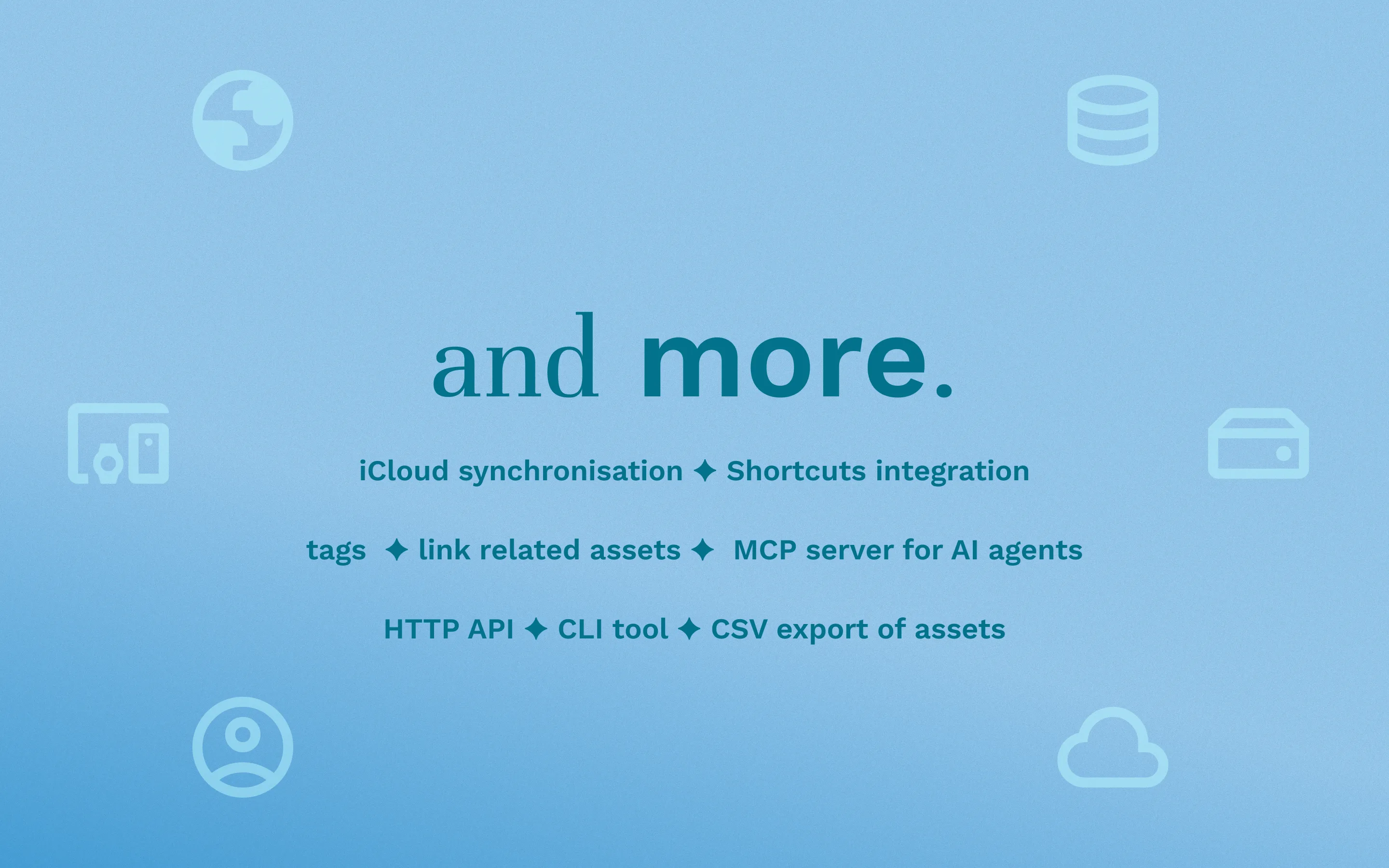
Sync directly from online providers, and use Resso's automation surfaces when your scripts, pipelines, or AI agents need infrastructure data.
A local API server to automate tasks and fetch Resso data programmatically.
Use Resso's database from your terminal, CI/CD scripts, or repeatable workflows.
Allow AI agents to securely access and modify your Resso database via ressoc mcp.
Use Resso as inventory in playbooks with the resso-ansible plugin.
Questions
Infrastructure inventory is the process of mapping and documenting the hardware, software, network configurations, and services that make up an environment. Resso makes that inventory visual, searchable, and relationship-aware.
Yes. Resso connects to providers like Oracle Cloud, Google Cloud, and other provider data sources to sync cloud assets into a unified asset manager.
Yes. You can track domain registrars, DNS records, SSL certificates, and renewal dates.
Yes. Resso lets you document server IPs, providers, and SSH credentials, then use the built-in terminal and SFTP browser for direct server work.
Yes. Custom asset types let you define note formats, relationships, tags, files, encrypted files, and raw notes for the way your projects are architected.
Yes. Resso is built as a local workspace and supports iCloud sync across macOS and iOS.
Use Resso when your projects, providers, and deployment details have outgrown scattered notes.